How we work
Great environments do not happen by chance. Behind every booth that stops traffic is our signature vertically integrated approach to your project, built to turn your brand story into a space people enter, remember, and act on. Here is how we work, from the first conversation to your next show.
We handle the whole arc: strategy, design, fabrication, installation, and every logistical detail in between. You arrive at your show ready to do what you do best, while we manage everything behind the scenes.
We start with conversations.
We clarify your goals, your audience, and the story only your brand can tell. Then we translate it into high-level sketches and renders for your team to react to.
→ You will review: goals brief, concept sketches and renders.
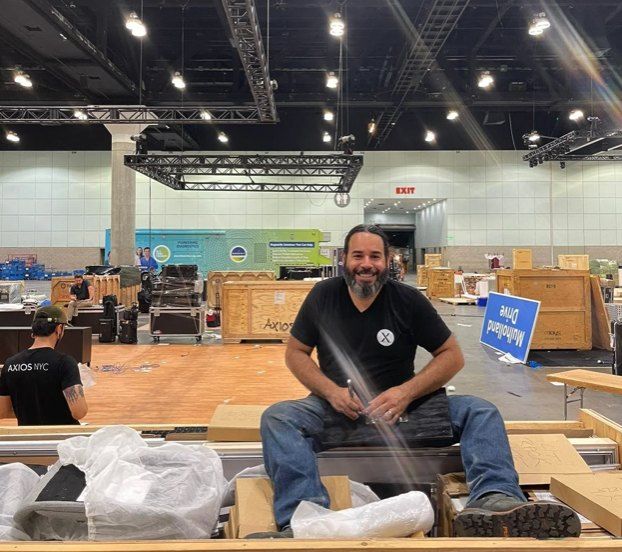
One team and one point of contact, from the first conversation to the last crate out of the hall. We take the calls with the venue, the forms the show wants filed, and the problems that surface at six in the morning on install day — so the only thing left on your plate is the conversation you came to have.
It shapes the build rather than getting added at the end. Modular structures that reconfigure instead of being rebuilt, materials chosen to survive show after show, and a reuse plan written before anything is cut. The lighter build and the smarter one turn out to be the same build.
If you already have an agency, we work with them rather than around them. Your brand guidelines, your creative direction, your timelines — we take the spatial and production side and leave the rest where it belongs. No territory, no duplicated work, no one waiting on a handover.
Footfall on its own tells you very little. We agree what a good show looks like in week one — conversations started, leads worth following, time spent in the space — and measure against that, so you leave with something you can put in front of your own stakeholders.
Strategy, design, fabrication, logistics and install sit under one roof. Nothing gets handed to a stranger halfway through, which is why a change in week six doesn't restart the project, and why the people who drew your stand are the ones on the floor when it goes up.

Innovation runs through the whole method, not one phase of it. 3D visualization helps teams to approve faster, rapid prototyping helps us to build with fewer surprises, AI-supported insights and real-time onsite metrics help to show what worked. Always in service of a smarter build and a sharper brand experience.
Design, fabrication and project management, yes — that's the whole point of the model, and it's why a change late in the process costs a conversation rather than a restart. The specialist trades a venue requires certification for, like rigging and electrical, are the exception. We bring in people we've worked with before and manage them ourselves, so you're still dealing with one team.
The honest answer is that it depends on the piece. The biggest lever isn't any single material, it's designing structures to be reconfigured and used again instead of skipped after one show. Where new material is specified we favour responsibly sourced timber and substrates that can actually be separated at end of life over composites that can't. Where a build involves a compromise, we'll tell you which part it is rather than pretend it isn't there.
That's how we design them. Stands are built to adapt to different footprints rather than to a single floor plan, and we store, maintain and refit them between shows. New graphics and a changed layout usually get you several seasons out of one structure, which is normally the cheaper as well as the lighter route.
Six months is comfortable for a large congress stand. Three is workable. Below that we can often still help, but the options narrow quickly — fabrication lead times and the show's own deadlines for drawings, rigging and freight stop being negotiable. The earlier you start, the more of your budget goes into the build rather than into rushing it.
Yes, and it's often the better spend. We'll look at what you have, tell you honestly what's worth keeping, and rework only the parts that need it. That applies to stands we didn't build — bringing an existing structure up to date is usually faster and cheaper than starting over.
From strategic spatial planning to flawless on-site execution.